The Khmer Empire and its Religious Significance
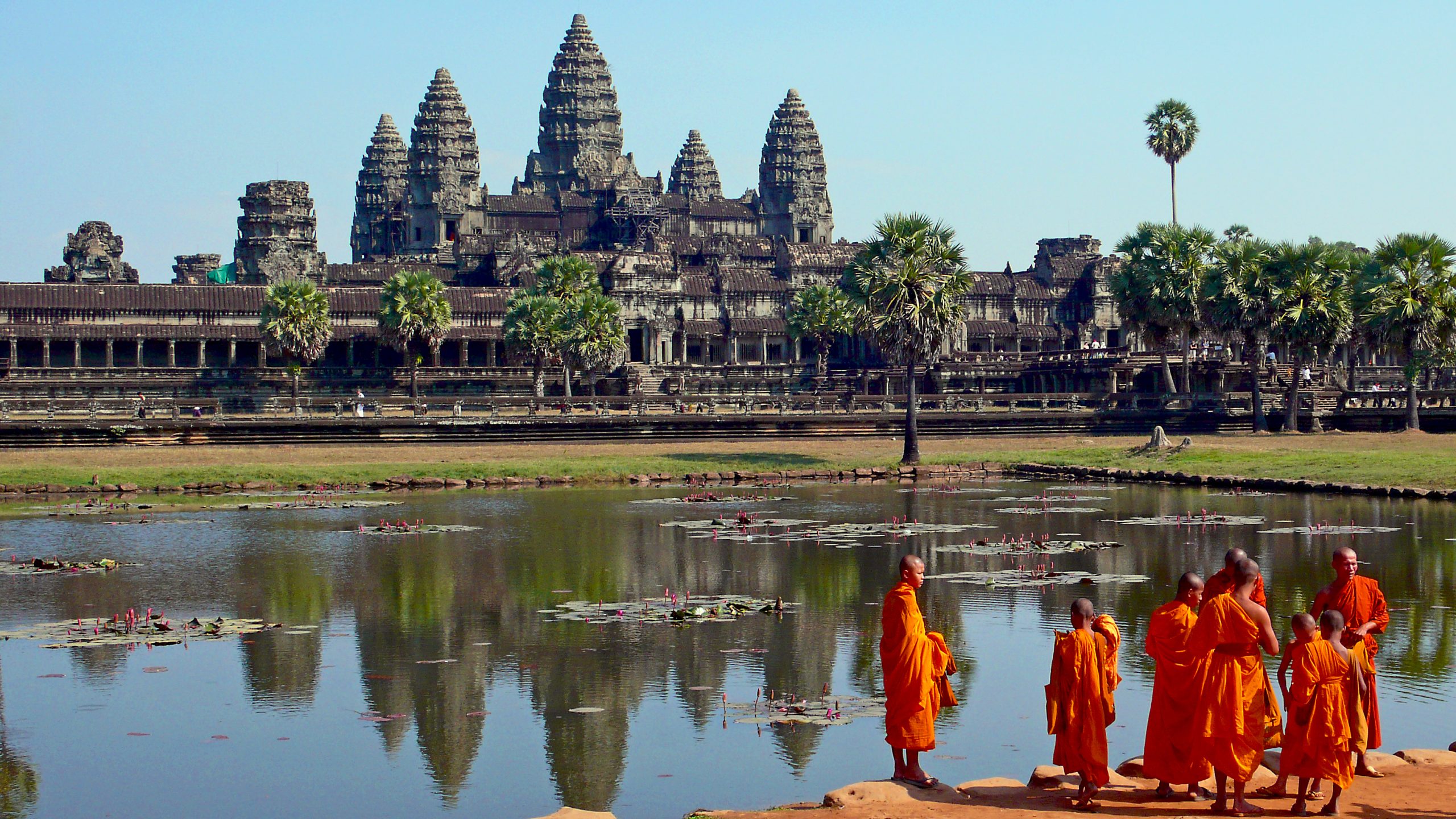
The Khmer Empire, which flourished from the 9th to the 15th century in Southeast Asia, is renowned for its monumental architecture, most notably the Angkor Wat temple complex. This empire was heavily influenced by Hinduism and later Buddhism, with its rulers commissioning vast religious monuments to showcase their devotion and power. The image likely draws from this rich cultural and religious history.
Jayavarman VII and the Bayon Temple
Jayavarman VII, one of the most celebrated kings of the Khmer Empire, ruled from 1181 to 1218. His reign is marked by significant religious and architectural developments, including the construction of the Bayon temple at Angkor Thom. Bayon is particularly famous for its massive stone faces, which are believed to represent the king himself in the guise of a bodhisattva, a compassionate figure in Mahayana Buddhism.
The image you provided might be inspired by the sculptures of Bayon, as it features a powerful, serene face adorned with intricate jewelry and a crown, reflecting the divine kingship of Jayavarman VII. The artistic portrayal of Jayavarman VII in religious contexts often blurs the lines between royalty and divinity, emphasizing his role as a god-king.
Vishnu and Shiva: The Cosmic Dancers
The image’s description mentions Vishnu and Shiva, two of the principal deities in Hinduism. Shiva, known as the cosmic dancer, performs the Tandava, a dance that represents the cosmic cycles of creation, preservation, and destruction. This dance is symbolic of the dynamic and ever-changing nature of the universe, which is central to Hindu cosmology.
Vishnu, on the other hand, is the preserver of the universe, maintaining the cosmic order and protecting dharma (moral order). The depiction of these deities in the image could symbolize the balance of creation and destruction, a concept that was integral to the religious beliefs of the Khmer Empire.
The Apsaras: Divine Dancers
Apsaras, celestial dancers in Hindu and Buddhist mythology, are often depicted in the art of the Khmer Empire. They are considered to be the divine entertainers at the court of the gods, particularly Indra, the king of heaven. The Apsara depicted in the image may symbolize the divine connection between the heavens and earth, as well as the spiritual elevation of the Khmer rulers.
Digital Art and Its Representation of Khmer Religious Iconography
The image is described as digital art, which means it is a modern interpretation of traditional Khmer religious iconography. This form of art allows for a creative exploration of historical themes, blending realism with artistic imagination to evoke the grandeur and spirituality of the Khmer Empire.
The use of digital techniques to depict the deity covered in gold and surrounded by flames adds a sense of divine power and timelessness. The flames might symbolize the purifying aspect of fire, a common element in many religious traditions, representing both destruction and renewal.
The Apex of Angkor Wat: A Symbol of Spiritual Aspiration
The reference to the status being on the apex of Angkor Wat is significant. Angkor Wat, originally built as a Hindu temple dedicated to Vishnu, is one of the largest religious monuments in the world. Its central tower, representing Mount Meru, the home of the gods, is the symbolic axis of the universe in Hindu cosmology. The placement of the deity on this apex suggests the highest point of spiritual aspiration, where the divine and earthly realms converge.
Conclusion
The image is a rich tapestry of religious and cultural symbolism, rooted in the history of the Khmer Empire and its profound spiritual traditions. The blending of elements like Vishnu, Shiva, Jayavarman VII, and the Apsaras reflects the syncretic nature of Khmer religious practices, where Hindu and Buddhist elements coexisted and influenced each other. The digital representation brings this ancient symbolism into the modern era, allowing for a renewed appreciation of the artistic and spiritual legacy of the Khmer Empire.