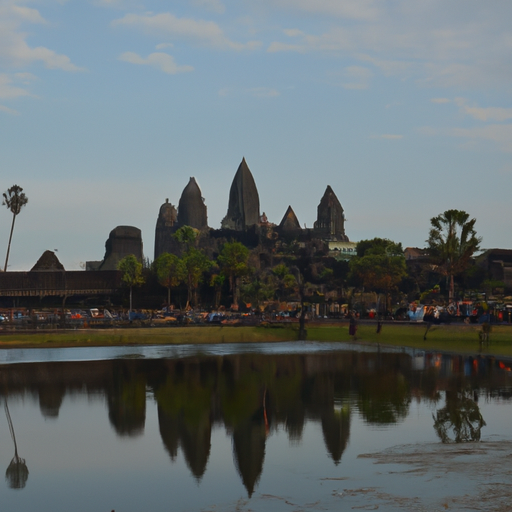
The Wonders of Angkor Wat During 1000 BC
The ancient Khmer civilization of Cambodia flourished during a thousand years from 802 AD to 1431 AD. During this period, Angkor Wat was constructed as a part of the Khmer Empire. Today, Angkor Wat is an awe inspiring temple located in the Siem Reap province of Cambodia and is a World Heritage Site.
Built between 800 and 1400 AD, Angkor Wat is the largest religious monument in the world and stands as a symbol of Cambodia’s cultural and religious heritage. It is also the prime example of the Khmer architecture in Southeast Asia.
The site was built as a temple-mountain dedicated to the Hindu god Vishnu. The temple was commissioned by Suryavarman II, a Khmer king, and was completed in the early 12th century. The temple was designed to represent Mount Meru, the home of the gods.
The main body of the temple is surrounded by a moat and measures 1.5 kilometers by 1.3 kilometers. The temple is made up of three levels, each with its own set of towers, courtyards, and gateways. The top level, which is the highest, contains the central shrine dedicated to Vishnu.
The most impressive feature of Angkor Wat is its intricate carvings and sculptures. The temple is decorated with intricate carvings of gods, goddesses, and scenes from Hindu mythology. The bas-reliefs on the walls depict scenes from the Ramayana, the Mahabharata, and the Hindu epics.
The sheer size of the structure is also breathtaking. It is made up of more than one million blocks of sandstone and laterite. The walls of the temple are decorated with intricate carvings and sculptures. The towers are adorned with intricate carvings of gods, goddesses, and scenes from Hindu mythology.
The grounds of Angkor Wat are surrounded by lush forests and are home to a variety of wildlife. The temple is also a breeding ground for migratory birds and a sanctuary for various species of animals. It also serves as an important archaeological site and is the subject of ongoing research.
Angkor Wat is a testament to the engineering and architectural prowess of the Khmer civilization of 1000 BC. The temple is a symbol of the power and wealth of the Khmer Empire and a reminder of the grandeur of the past. The temple stands as a symbol of the nation’s cultural and religious heritage and is a must-see for anyone interested in Southeast Asian history.