Thailand and Cambodia are reinforcing their military presence along a disputed section of the border near Preah Vihear following a deadly skirmish last month, Thai officials confirmed this week. The escalation has renewed tensions over long-standing territorial disputes dating back more than a century and rooted in colonial-era boundary demarcations.
A Flare-Up With Historic Roots
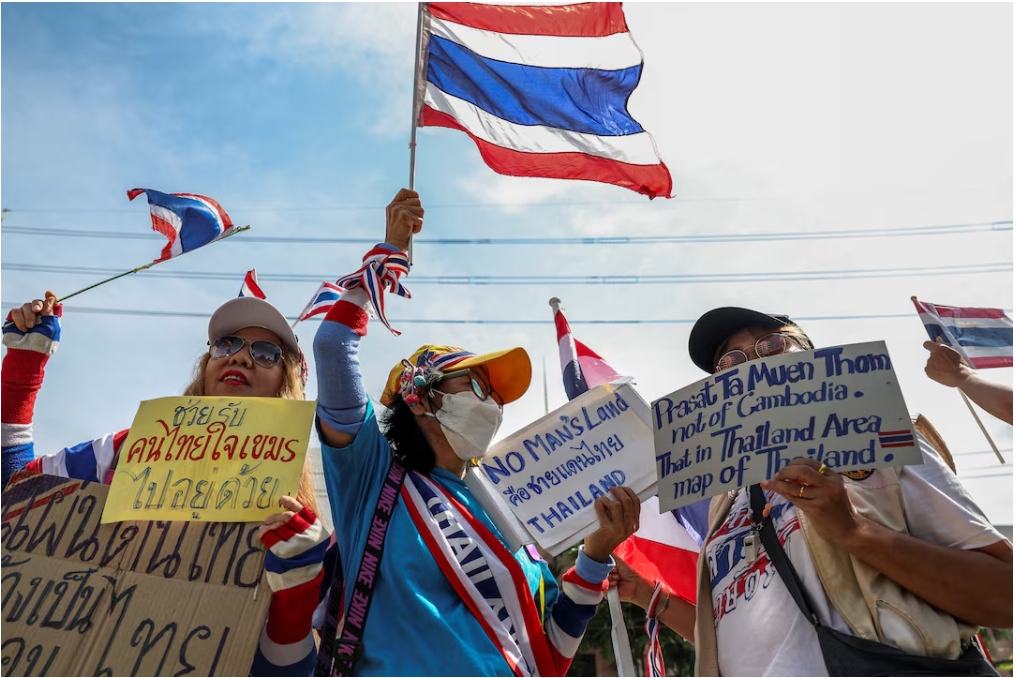
On May 28, a clash erupted in the area of Ta Moan Thom temple—an ancient site located along the contentious stretch of border in Surin province—resulting in the death of at least one Cambodian soldier. Thai officials said that the incident was sparked by unauthorized trench-digging and the movement of Cambodian troops into a disputed zone. Cambodia has claimed the actions were defensive and within their rights.
Thai Defense Minister Sutin Klungsang announced on Saturday that both countries are now deploying more troops to secure their respective claims in the area. “While we are maintaining open communication with Cambodian authorities, we are also prepared for any necessary defense of Thai sovereignty,” he stated.
The move follows Cambodia’s decision to formally pursue international legal arbitration. Prime Minister Hun Manet’s government confirmed this week that it will take the dispute to the International Court of Justice (ICJ) in The Hague, seeking a binding ruling over four disputed areas including Ta Moan Thom, Ta Moan Toch, Ta Kro Bei, and the surrounding zones near the Preah Vihear temple.
Thailand’s Firm Stance
Thailand, however, has rejected the move, stating that border disagreements should be handled bilaterally through the existing Joint Boundary Commission (JBC), which is scheduled to meet again on June 14. The Thai government also shortened operating hours at 10 border crossings and suspended tourist and cargo transport through Sa Kaeo province, citing security concerns.
“Thailand is not a party to this ICJ initiative,” said Foreign Affairs Ministry spokesperson Jakkapong Sangmanee. “We are committed to peaceful dialogue, but any threat to our sovereignty will be met with appropriate measures.”
Cambodia’s Legal Strategy
Cambodia’s Parliament unanimously approved the ICJ application on Thursday. Prime Minister Hun Manet said that while Cambodia wants to avoid conflict, bilateral negotiations have not produced tangible results over the years.
“We must seek a legal resolution to avoid further misunderstanding or violence,” Hun Manet said during a televised address. “The ICJ is the world’s highest legal body and has a proven track record in resolving such disputes.”
The current border controversy stems largely from differing interpretations of French colonial maps from 1907 and subsequent agreements. In 1962, the ICJ awarded the Preah Vihear temple to Cambodia, a decision Thailand initially accepted. However, the surrounding land remained disputed, leading to intermittent tensions over the past two decades.
Rising Nationalism and Historical Parallels
This isn’t the first time nationalism has inflamed cross-border tensions. In 2003, anti-Thai riots erupted in Phnom Penh after a Thai actress was misquoted as claiming Angkor Wat belonged to Thailand. The Thai embassy was burned and bilateral relations plunged. More recently, domestic political divides in Thailand have complicated border policy, with some critics accusing the current government of taking too soft a stance.
Prime Minister Paetongtarn Shinawatra pushed back this week against such criticism. “This is a deeply sensitive matter. Escalation is not in anyone’s interest,” she told reporters. “We must proceed with caution and diplomacy.”
Regional and Global Implications
Analysts note that the flare-up comes at a time when regional alliances are shifting. Vietnam, once Cambodia’s key backer against the Khmer Rouge, is now strengthening ties with the United States. Meanwhile, China—formerly aligned with the Khmer Rouge and the United States during the Cold War—has emerged as a major economic and military partner for both Cambodia and Thailand.
Despite these changes, the ghosts of past conflicts continue to haunt the present. During the Cold War, Thailand, the U.S., and China backed anti-Vietnamese factions in Cambodia, including remnants of the Khmer Rouge. Hun Sen’s early enemies found refuge in Thailand. Decades later, mistrust remains entrenched.
Looking Ahead
With troops dug in and diplomatic efforts underway, the upcoming JBC meeting will be closely watched. Thailand’s rejection of the ICJ process and Cambodia’s insistence on legal arbitration suggest that the road ahead could be bumpy.
Still, both sides have publicly committed to peace. Whether that commitment holds in the heat of nationalistic sentiment remains to be seen.